
As I stirred the pot of simmering goodness, the warm, aromatic scents of garlic, spices, and tomatoes swept through the kitchen, instantly taking me back to my travels in New Orleans. This Classic Creole Jambalaya is a vibrant, hearty dish that beautifully balances chicken, smoky sausage, and plump shrimp with a medley of colorful vegetables. Not only is it a comforting taste of home, but this recipe also embraces the rich traditions of Cajun and Creole cuisine. The best part? It comes together in under an hour, making it a perfect choice for a busy weeknight family meal. Whether you’re serving it for a cozy dinner or a lively gathering with friends, you’ll find this jambalaya is bound to please even the pickiest eaters. Ready to discover the flavors of the bayou? Let’s dive into this delicious recipe!
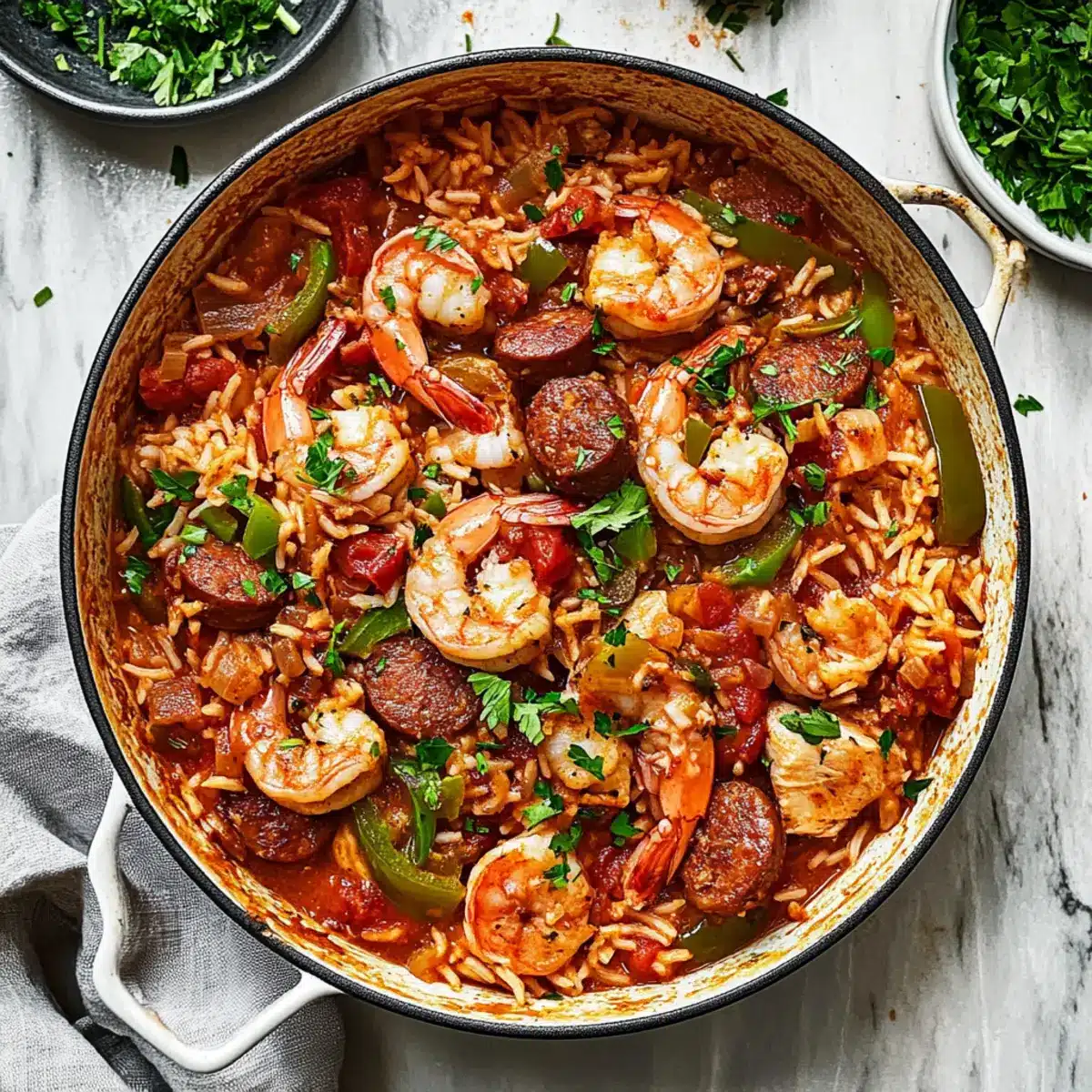
Why is Jambalaya a Family Favorite?
Comforting warmth: Jambalaya is a dish that brings families together with its hearty flavors that satisfy any appetite. Bursting with flavor: The blend of Cajun and Creole spices offers a memorable twist that tantalizes taste buds. Quick preparation: Ready in under an hour, it’s ideal for busy nights. Versatile options: You can easily adjust proteins or use riced cauliflower for gluten-free eaters. Crowd-pleaser: This classic ensures everyone leaves the table happy, making it perfect for gatherings. Nostalgic essence: Each bite transports you to the comforting streets of New Orleans. Don’t miss out on this feast; check out our Easy Jambalaya Variations for fun twists!
Jambalaya Ingredients
For the Cooking Base
• Extra-virgin olive oil – Provides a rich, smooth cooking medium; substitute with any neutral oil.
• Boneless skinless chicken thighs – Main protein source; tender and flavorful; can replace with chicken breast for a leaner option.
• Andouille sausage – Adds a smoky depth; substitute with kielbasa or omit for a lighter version.
• Cajun seasoning – Key for flavor; adjust quantity based on desired spice level; homemade blends or store-bought can work.
• Yellow onion, green bell pepper, celery – Mirepoix (the holy trinity) provides an aromatic base; can substitute with shallots or use red bell pepper for color.
• Garlic cloves – Enhances flavor; can use garlic powder as a last resort.
• Red pepper flakes – Adds heat; can omit or reduce for a milder flavor.
For the Rice and Liquid
• Long grain white rice – Main carbohydrate; should be rinsed before cooking; do not substitute with short grain rice.
• Bay leaf – Introduces a subtle earthiness; easy to omit if unavailable.
• Crushed tomatoes – Provides moisture and richness; fresh diced tomatoes can be used instead.
• Low-sodium chicken broth – Adds depth; use regular broth for richer flavor or vegetable broth for a vegetarian approach.
For the Finish
• Large shrimp – Final protein addition; must be peeled and deveined; can use other seafood or omit for vegetarian jambalaya.
• Green onions and parsley – For garnish; adds freshness and color.
This vibrant jambalaya is sure to delight! Just gather these ingredients, and you’ll be on your way to creating a dish that’s rich in flavors and tradition.
Step‑by‑Step Instructions for Jambalaya
Step 1: Season the Chicken
Start by taking your boneless skinless chicken thighs and cutting them into bite-sized pieces. In a bowl, toss the chicken with 1 tablespoon of Cajun seasoning until evenly coated. This step infuses the meat with essential flavor, enhancing the overall taste of your jambalaya. Set the seasoned chicken aside as you prepare to cook it.
Step 2: Cook the Chicken
In a large Dutch oven, heat 2 tablespoons of extra-virgin olive oil over medium-high heat. Once hot, add the seasoned chicken and sauté for about 5-7 minutes, flipping until golden brown and cooked through. You’ll know it’s ready when the internal temperature reaches 165°F and the surface is slightly crispy. Once cooked, remove the chicken and set it aside.
Step 3: Cook the Sausage
In the same Dutch oven, add your sliced andouille sausage, cooking on medium heat for around 4-5 minutes. Sauté until the sausage is browned and fragrant, adding depth to the jambalaya. The rendered fat from the sausage will complement the chicken flavor. Once done, mix it with the chicken that’s set aside, allowing the flavors to meld together.
Step 4: Sauté the Vegetables
Next, add chopped yellow onion, green bell pepper, and diced celery (the holy trinity) to the Dutch oven. Sauté these vegetables for about 5 minutes or until softened. Stir in minced garlic and red pepper flakes, cooking for an additional 30 seconds until aromatic. This blend of sautéed vegetables is crucial in developing the base flavor of your jambalaya.
Step 5: Add Rice and Liquid
Stir in 1 ½ cups of rinsed long-grain white rice, ensuring it is well coated with the oil and spices. Pour in crushed tomatoes, low-sodium chicken broth, and add 1 bay leaf. Increase the heat to bring the mixture to a simmer, ensuring all ingredients are well combined. The liquid will help cook the rice evenly, absorbing all the wonderful flavors.
Step 6: Cook the Rice
Once simmering, cover the pot and reduce the heat to low. Let the jambalaya cook for about 7-8 minutes, stirring gently and occasionally. The goal is to achieve al dente rice that’s tender but not mushy. You’ll know it’s ready when the liquid is mostly absorbed, and the rice has a slight bite to it.
Step 7: Add Shrimp and Protein
After the rice is cooked, uncover and add the peeled and deveined shrimp, along with the previously cooked chicken and sausage. Gently stir to incorporate everything, then cover again and cook for another 4-5 minutes until the shrimp turn pink and opaque. This final step brings all the proteins together beautifully, enriching the jambalaya with its flavors.
Step 8: Finish and Garnish
Remove the bay leaf from the pot and taste your jambalaya, adjusting seasoning if necessary. Serve hot, garnished with freshly chopped green onions and parsley for a pop of color. This finishing touch enhances the dish and adds a vibrant finish to your Classic Creole Jambalaya experience.
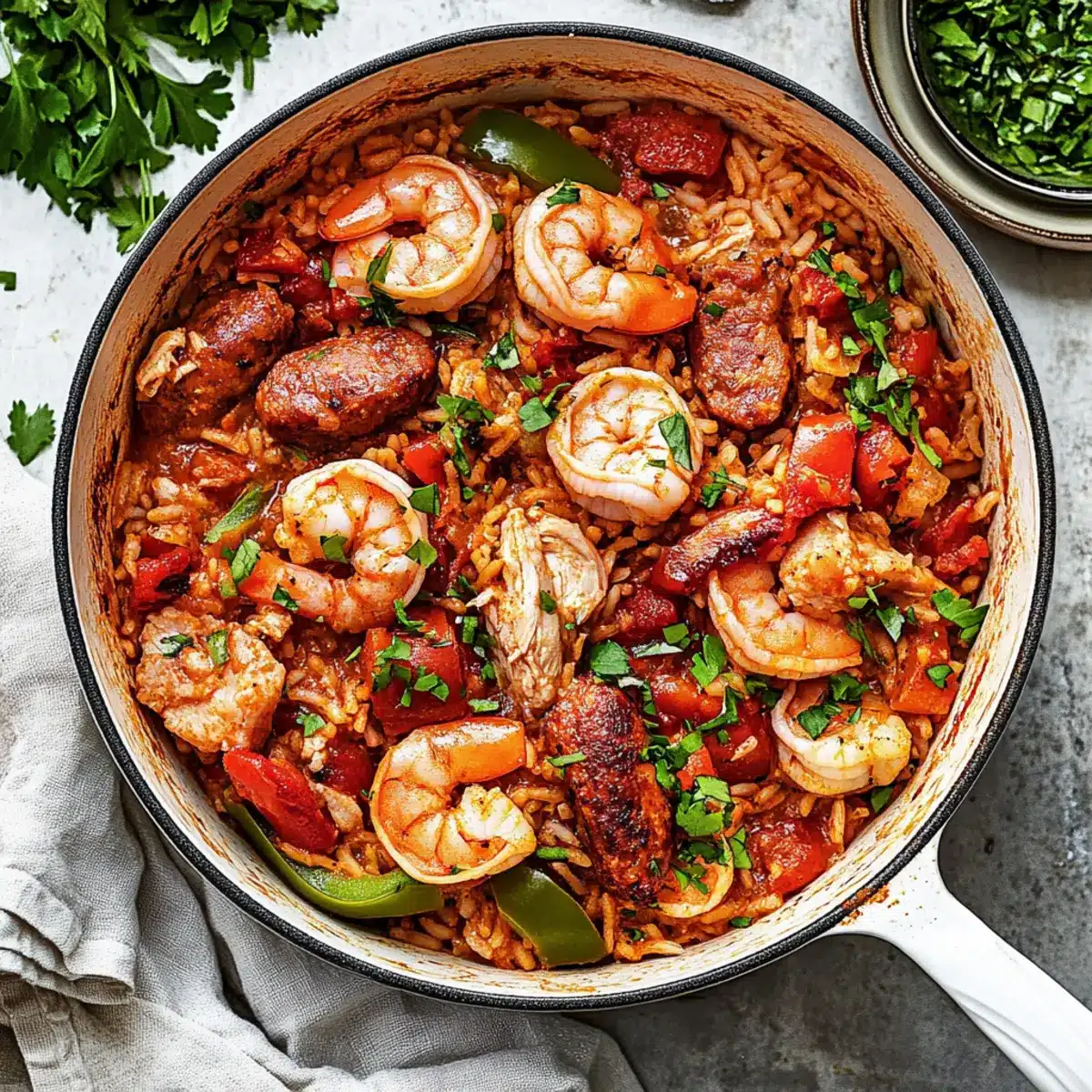
Storage Tips for Jambalaya
Fridge: Store leftovers in an airtight container in the refrigerator for up to 3 days to maintain freshness and flavor.
Freezer: For longer storage, freeze portions of jambalaya in airtight containers or freezer bags for up to a month.
Reheating: When ready to enjoy, thaw the jambalaya overnight in the fridge, then reheat gently on the stove with a splash of broth to preserve texture.
Room Temperature: Avoid leaving jambalaya at room temperature for more than 2 hours to prevent spoilage.
What to Serve with Classic Creole Jambalaya
Serve this hearty dish with delightful accompaniments for a truly satisfying meal experience.
-
Crusty French Bread: Perfect for soaking up those delicious flavors, crusty bread adds a comforting, chewy texture to your meal.
-
Fresh Green Salad: A light salad featuring mixed greens, cherry tomatoes, and a tangy vinaigrette balances the rich jambalaya, providing a burst of freshness.
-
Garlic Butter Shrimp: Complement your jambalaya with garlic butter shrimp for an extra seafood treat; the buttery goodness enhances the overall flavor profile.
-
Cornbread Muffins: Sweet and moist cornbread muffins bring a delightful contrast in flavor, offering a comforting sweetness that pairs beautifully with the spices.
-
Roasted Vegetables: Seasonal roasted veggies add a crunchy texture and vibrant colors to your meal, enriching each bite with additional nutrients.
-
Crisp Coleslaw: The crunchy, creamy aspect of coleslaw provides a refreshing contrast, cutting through the hearty character of jambalaya with ease.
-
Spicy Hot Sauce: A drizzle of your favorite hot sauce will amp up the heat and excitement, taking your jambalaya experience to the next level.
-
Iced Tea or Lemonade: Quench your thirst with a refreshing glass of iced tea or lemonade, both of which complement the spicy richness perfectly.
-
Chocolate Mousse: For dessert, a rich chocolate mousse offers a sweet ending, creating a lovely balance after the robust flavors of your jambalaya.
Make Ahead Options
These Classic Creole Jambalaya are perfect for busy home cooks looking to save time during the week! You can season the chicken and sausage, along with chopping the vegetables, up to 24 hours in advance. Store the prepared ingredients separately in airtight containers in the refrigerator to maintain their freshness and flavor. When ready to cook, simply sauté the prepped ingredients, add your rice and liquids, and follow the remaining steps. This approach allows you to enjoy a hearty, comforting meal with minimal effort, ensuring you can still savor the rich flavors of jambalaya even on the busiest of nights!
Expert Tips for Jambalaya
Choose the Right Rice: Avoid using short grain rice as it can become gummy; opt for long grain white rice for the perfect texture.
Season Over Time: For an even flavor distribution, let your seasoned chicken sit for a few minutes before cooking to deepen its taste.
Stir Gently: Over-stirring the rice can release starch, making it mushy. Stir just enough to combine ingredients and let it cook undisturbed.
Monitor Liquid Levels: Keep an eye on the amount of broth; too little can lead to undercooked rice, while too much can make it soupy.
Taste and Adjust: Always taste your jambalaya before serving; adjusting the seasoning with salt or extra Cajun spice will elevate the final dish.
Garnish for Freshness: Don’t skip the green onions and parsley garnish; they add a burst of freshness and color to your delicious jambalaya!
Jambalaya: Customize Your Way
Feel free to let your culinary creativity shine as you make this jambalaya your own!
- Meat Swap: Replace the andouille sausage with turkey sausage for a lighter option or omit it entirely for a vegetarian delight. This versatile dish embraces all tastes!
- Extra Veggies: Add okra or diced carrots for a pop of extra nutrition and color that makes every bite more delightful. The more vibrant your dish, the more inviting it becomes!
- Cauliflower Rice: For a lower-carb twist, substitute the long grain rice with riced cauliflower, adjusting broth quantities accordingly. It keeps the dish hearty while lightening the load!
- Spicy Kick: Amp up the heat by adding diced jalapeños along with the vegetables. It’s an easy way to tailor the spice level to suit your family’s palate, resulting in a pleasing explosion of flavors!
- Herb Infusion: Incorporate fresh herbs like thyme or oregano into the vegetable sauté for an aromatic uplift. This little addition can significantly enhance the dish’s complexity!
- Seafood Variety: Mix in other seafood like scallops or fish fillets for a diverse seafood experience that complements the flavors of the jambalaya wonderfully. You can create your very own coastal feast!
- Tomato Twist: Use roasted canned tomatoes instead of crushed ones for a richer, smoky flavor that adds depth to your jambalaya. Experimenting with flavors leads to delightful surprises!
- Creamy Version: Stir in a splash of heavy cream or coconut milk at the end for a creamy variation that enriches the overall texture and gives it a luscious mouthfeel. Who could resist that luscious touch?
Each variation allows you to personalize your jambalaya. Don’t forget to check out our Easy Jambalaya Variations for more exciting ideas! Your kitchen adventures are about to get even more thrilling!
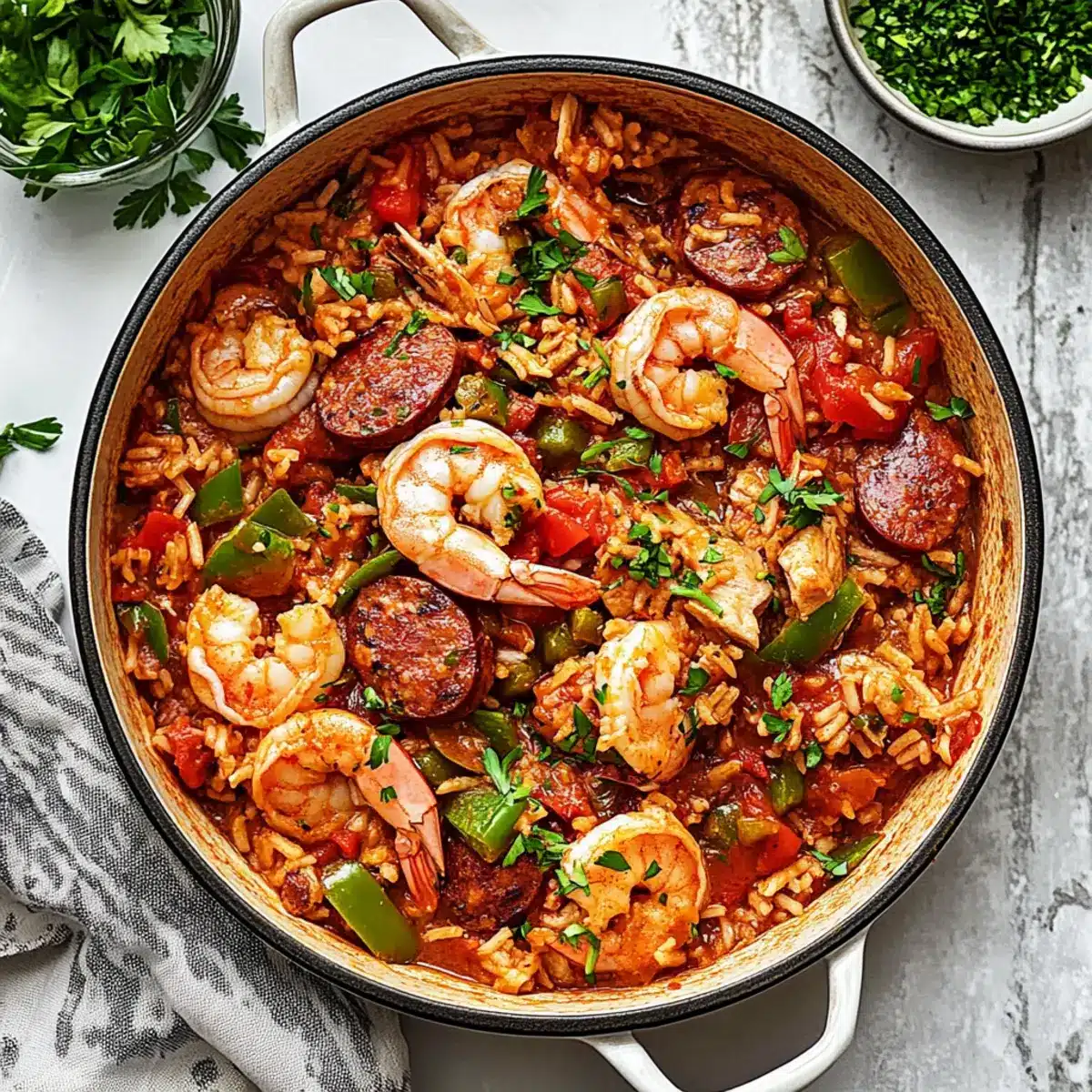
Jambalaya Recipe FAQs
What type of rice should I use for jambalaya?
Always opt for long grain white rice when making jambalaya. This type maintains the perfect texture, preventing the dish from becoming mushy. Short grain rice can release excess starch, resulting in a gummy consistency that won’t hold up well in this hearty dish.
How should I store leftover jambalaya?
Store leftovers in an airtight container in the refrigerator for up to 3 days. Make sure to let the jambalaya cool to room temperature before sealing it to avoid condensation, which can lead to sogginess.
Can I freeze jambalaya?
Absolutely! Freeze portions of your jambalaya in airtight containers or heavy-duty freezer bags for up to a month. When you’re ready to enjoy it again, thaw the jambalaya in the fridge overnight and reheat on the stove with a splash of broth to maintain its delicious texture.
What should I do if my jambalaya is too watery?
If your jambalaya turns out too watery, continue cooking it uncovered over low heat. This allows some of the excess liquid to evaporate, thickening the dish. Stir gently to prevent sticking and monitor it closely until you’ve reached the desired consistency.
Can I make jambalaya without shrimp?
Yes, you can absolutely make jambalaya without shrimp! Simply omit them and either double the amount of chicken or sausage, or introduce additional vegetables like okra or bell peppers. This way, you still get a flavorful and hearty meal without compromising the classic jambalaya experience.
Is jambalaya safe for my pets?
While jambalaya is delicious for humans, it’s not recommended for pets. Ingredients like onions and garlic can be harmful to dogs and cats. Always consult your veterinarian about which human foods are safe for your furry friends.
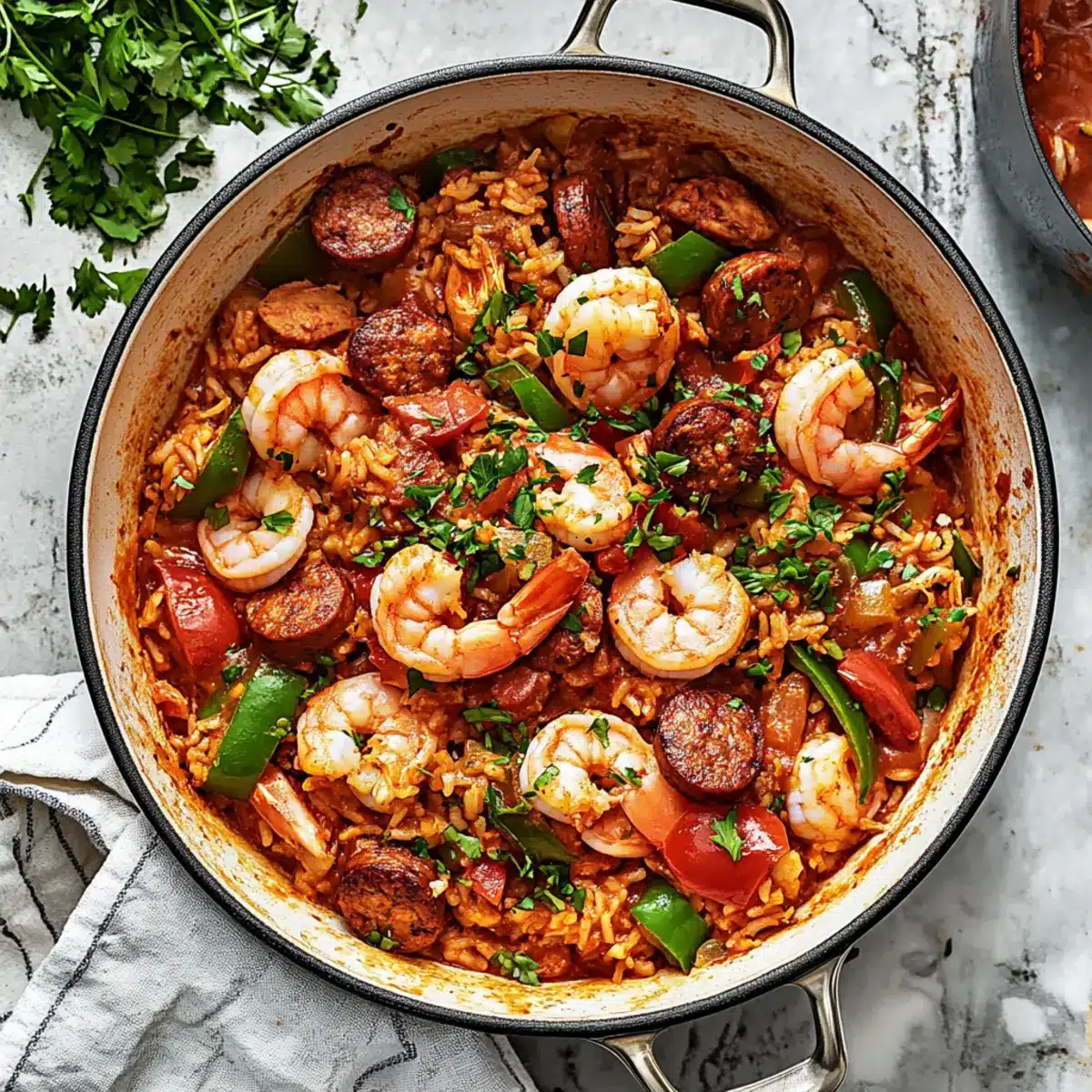
Mouthwatering Jambalaya: A Comforting Heartwarming Classic
Ingredients
Equipment
Method
- Season the chicken by cutting it into bite-sized pieces and tossing it with Cajun seasoning in a bowl.
- In a large Dutch oven, heat olive oil and sauté the chicken for 5-7 minutes until golden and cooked through.
- Cook the sliced sausage in the Dutch oven for 4-5 minutes until browned and fragrant.
- Sauté chopped onion, bell pepper, and celery for about 5 minutes until softened, then add garlic and red pepper flakes.
- Stir in rinsed rice, crushed tomatoes, broth, and bay leaf, ensuring ingredients are combined and bring to a simmer.
- Cover and reduce heat, cooking for 7-8 minutes or until the rice is al dente.
- Add shrimp, previously cooked chicken, and sausage, stir gently, and cook for another 4-5 minutes until shrimp are pink.
- Remove the bay leaf, adjust seasoning if necessary, and serve garnished with green onions and parsley.
Leave a Reply